
Diagnose before building
Start with the bottleneck, the people affected, the cost of the problem, and the decisions that cannot be delegated.
Marketing. Sales. AI. Working as one.
TMM diagnoses where labor, speed, follow-up, and opportunity are being lost, then builds or integrates the smallest useful system that can improve the result.
Request a DemoHow we decide
We do not force AI into work because the market is talking about it. We use it strategically where it improves speed, quality, decisions, or revenue, and leave it out where it adds complexity without value.
Start with the bottleneck, the people affected, the cost of the problem, and the decisions that cannot be delegated.
Use AI only when it improves the answer. Sometimes the right move is an integration, conventional software, a process repair, or no build at all.
Build the smallest credible version that can prove value before committing budget to a larger system.
Connect the workflow, establish human review, train the team, and measure whether the result deserves to expand.
Custom capabilities
These are practical build categories, not a promise that every client needs custom software. We scope the smallest system that can solve the problem and make the business case visible.
Turn complex criteria, evidence, and expert judgment into a guided system that produces a useful recommendation without hiding the reasoning.
Connect tools that do not work together, remove duplicate entry, and keep the necessary data moving between people and systems.
Build focused research, qualification, routing, approval, and follow-up workflows around how the business actually sells.
Give a team direct control over the fields and decisions they need without handing them a fragile general-purpose system.
Combine planning, research, reporting, content, reminders, and human review in one usable internal workflow.
Create calculators, diagnostic tools, portals, guided intake, and interactive campaigns when they make the offer easier to understand or use.
Built for real use
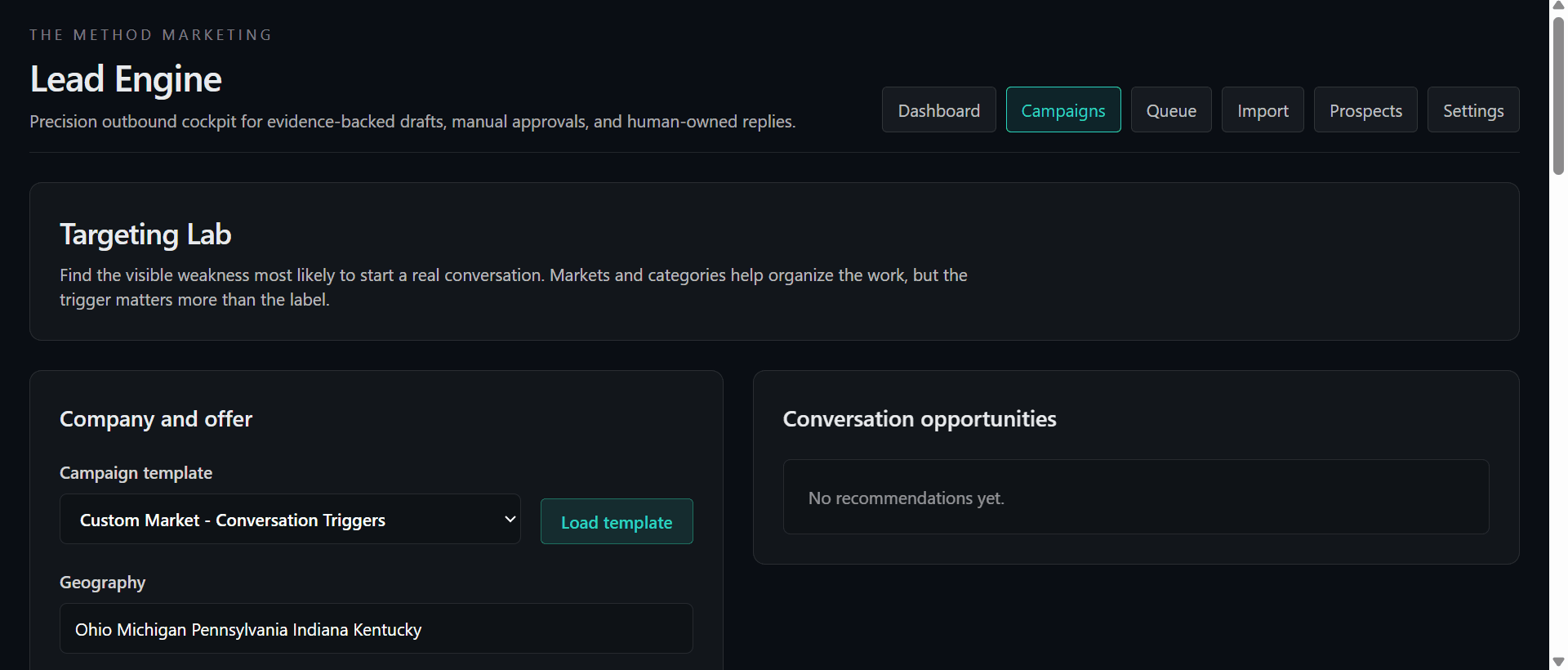
Lead Engine is a custom system for finding current buying signals, organizing research, drafting from evidence, and keeping approval with a person. It exists because a generic CRM or scraping tool did not solve the actual workflow.
Decision system
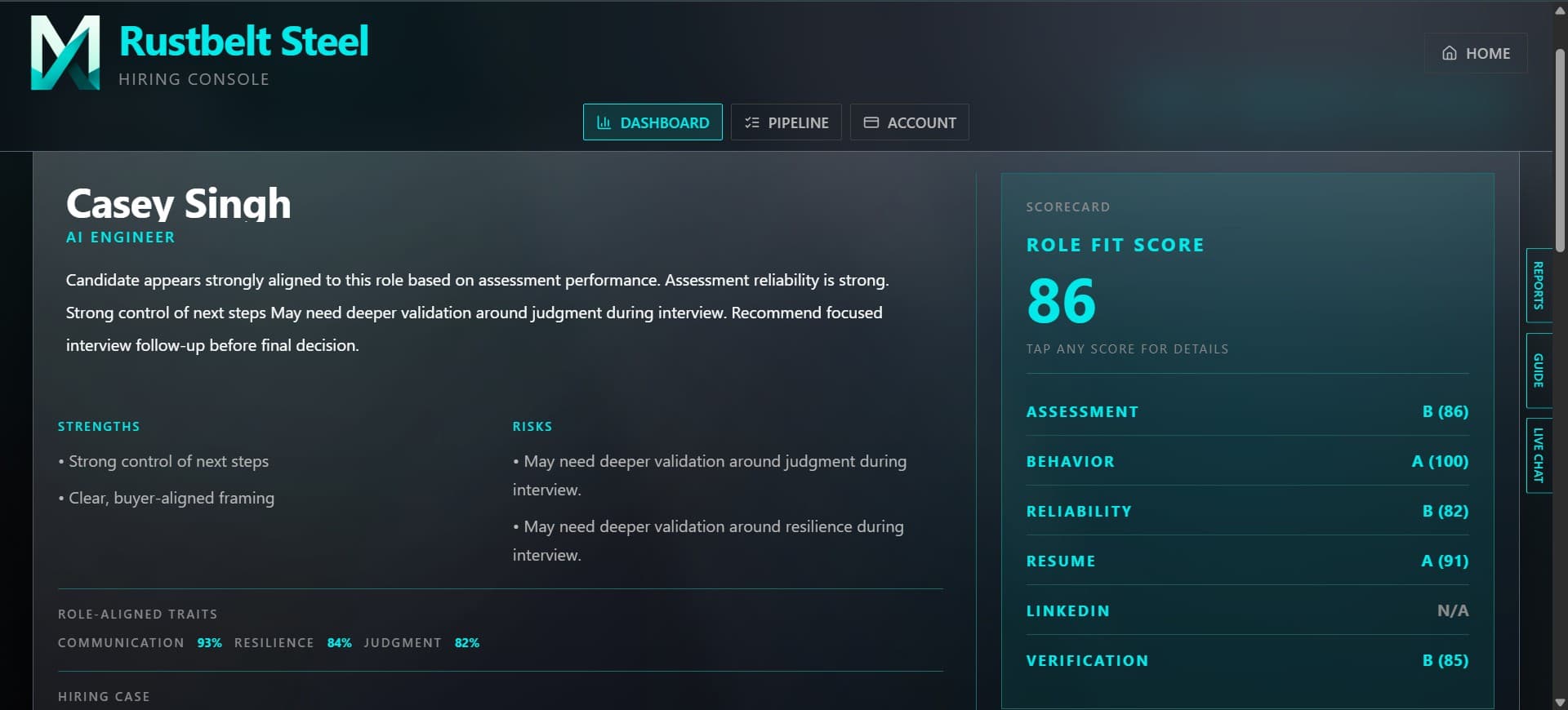
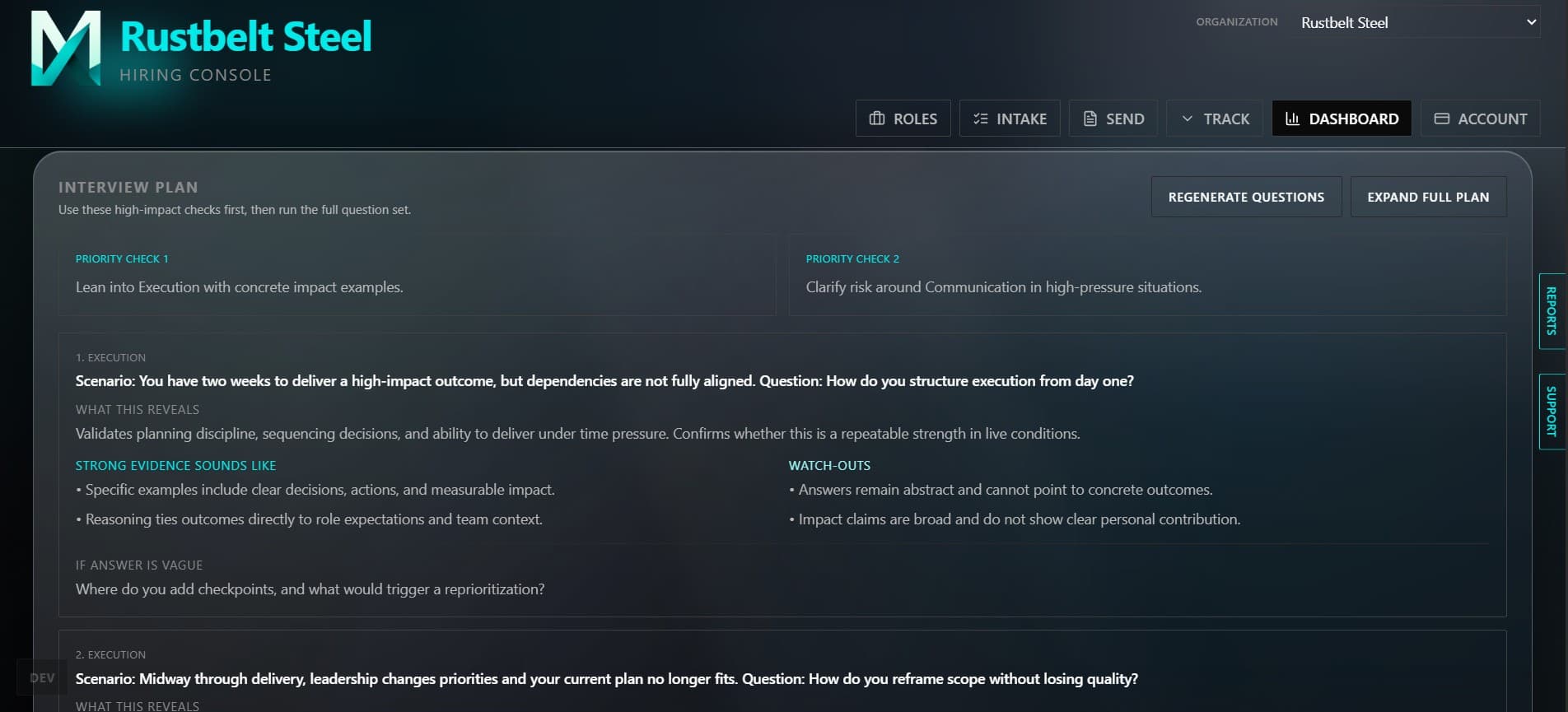
A role-specific assessment and decision system that combines weighted traits, AI-assisted analysis, candidate evidence, scorecards, and focused interview plans. It helps a hiring team see what deserves validation instead of handing them a mysterious score.
See Method SignalsInternal system
Controlled website editing, momentum planning, reporting, and lead handling built around the work our team actually needs to control.
Interactive build
Calculators, guided tools, and incentive-based interactive experiences that connect engagement to a commercial action instead of existing as decoration.
Speed without fiction
Speed is a real advantage when the problem is clear. We work in short proof-of-concept cycles so a team can see and test the important part before funding the full system.
Actual timing depends on data, integrations, security, approval requirements, and scope. We will tell you whether a credible first version is a matter of days, weeks, or not worth building before proposing a larger commitment.
Request a DemoGood fit
TMM is strongest when marketing, sales, software, and operating judgment need to meet. We can move from diagnosis into the build, implementation, and team training, while still saying when a normal process fix is better than AI or a deeper specialist needs to own part of the work.
Start with something observable
Straight answers
No. TMM focuses on commercially useful AI work across marketing, sales, visibility, research, reporting, and related workflows. When a project requires deeper security, infrastructure, legal, or enterprise integration expertise, that work needs the right specialist involved.
Yes. When a targeted build is better than another subscription, TMM can design, prototype, and build focused AI-native or conventional software. The decision starts with the user, workflow, and business case. AI is one option, not the automatic first choice.
Yes. Training can cover practical tool use, prompting, workflow design, quality control, human review, and the standards a team needs to use AI without producing faster low-quality work.
Start with one recurring workflow that has a visible cost, delay, quality problem, or revenue consequence. Define the baseline, preserve the necessary human decisions, and test whether the change produces enough value to justify expansion.
TMM works in short proof-of-concept cycles and moves quickly when the problem is clear. A credible timeline depends on the workflow, data, integrations, security, and approval requirements. We will tell you whether the useful first version is a matter of days, weeks, or not worth building before proposing a larger commitment.
Show us the bottleneck
We will help determine what should be built, integrated, taught, repaired, or left alone, then show you the most useful next move.